
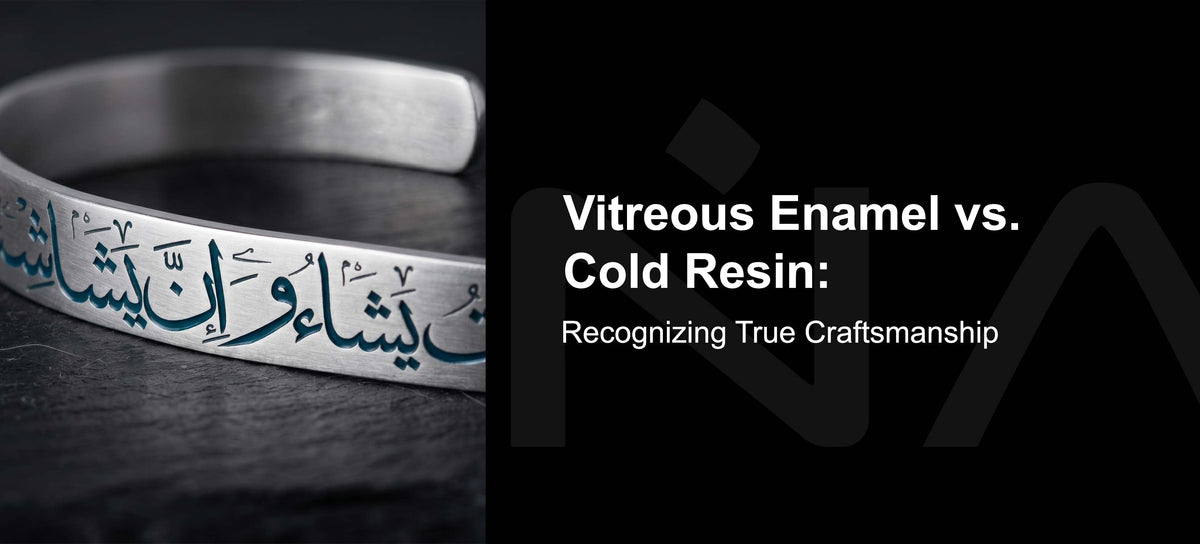
Vitreous Enamel vs. Cold Resin: Recognizing True Craftsmanship
Vitreous Enamel vs. Cold Resin: Recognizing True Craftsmanship
In the esoteric world of men’s luxury fashion, the materials a gentleman chooses to wear speak volumes before he ever utters a word. As affluent professionals and executives curate their wardrobes, a discerning eye for authentic artisan craftsmanship becomes paramount. One of the most common intersections of ancient artistry and modern design is found in the use of vibrant, colored inlays. However, a significant divide exists in the market between true enamel vs resin jewelry. Understanding what is the difference between enamel and resin in jewelry is the key to distinguishing a fleeting accessory from a generational heirloom.
Quick Answer: What is the difference between enamel and resin in jewelry?
The primary difference between enamel and resin in jewelry is material composition and the manufacturing process. True vitreous enamel is fine glass powder fused to metal in a kiln at temperatures exceeding 1,400°F (760°C), resulting in a heavy, scratch-resistant, and vibrant finish that lasts centuries. Conversely, cold resin is a synthetic liquid polymer (plastic) mixed with a chemical hardener that cures at room temperature. While resin is cheaper and easier to mass-produce, it lacks the durability, weight, and luminous depth of genuine glass enamel, and is prone to yellowing and scratching over time.
The Soul of Vitreous Enamel: A Heritage of Fire and Glass
To appreciate premium men's accessories, one must understand the alchemy of true vitreous enamel. Derived from the High German word smelzan (to smelt), enameling is an ancient and punishingly difficult art form. It requires a master jeweler to fuse powdered glass to a metal substrate—typically sterling silver or solid gold—using extreme heat.
The Historical Significance of Enameling
The technique is not a modern invention. The mastery of vitreous enamel dates back to antiquity, finding profound expression in Islamic art, Byzantine religious artifacts, and the armories of ancient monarchs. Historically, colored glass was viewed with the same reverence as precious gemstones. Master craftsmen developed complex techniques, such as Champlevé (carving troughs into metal and filling them with glass) and Cloisonné (creating intricate compartments with fine silver or gold wire), to bring vibrant colors to metalwork.
Because glass does not fade, oxidize, or degrade, historical enameled pieces excavated centuries later retain the exact brilliance they possessed the day they left the artisan's kiln. This permanence makes true enamel the gold standard for heritage-inspired jewelry.
The Artisan Process
Creating vitreous enamel jewelry is a high-risk, high-reward endeavor. The process involves:
-
Milling: Grinding colored glass shards into a microscopic, sand-like powder.
-
Application: Wet-packing the glass dust into the recessed areas of a meticulously carved metal ring or pendant.
-
Firing: Fusing the piece in a kiln at temperatures between 1,400°F and 1,600°F.
-
Iteration: Because the glass shrinks as it melts, the jeweler must repeat the packing and firing process multiple times to build depth.
-
Finishing: The piece is ground flat with diamond abrasives and polished to a flawless, mirror-like finish.
If the kiln is too hot, the colors burn and turn muddy. If the metal cools too quickly, the glass shatters. The survival of a piece through this baptism of fire is the very definition of luxury craftsmanship.
The Reality of Cold Resin: Fast Fashion's Synthetic Alternative
In stark contrast to the ancient art of vitreous enamel stands cold resin. Often deceptively marketed by mass-market brands as "cold enamel" or "epoxy enamel," resin is fundamentally a modern, petroleum-based plastic.
The Manufacturing Process of Resin
Resin jewelry is created by mixing a liquid synthetic polymer with a liquid chemical hardener. Once combined, the mixture is poured into the recesses of a metal accessory and left to cure at room temperature (or slightly elevated temperatures) over 24 to 48 hours.
The advantages of resin are purely commercial:
-
Cost-Effectiveness: The raw materials are exceptionally cheap compared to fine glass and precious metals.
-
Speed: It requires no specialized kilns, extreme heat, or diamond-polishing. Thousands of pieces can be poured and cured in a factory within a single day.
-
Predictability: Resin does not crack under thermal shock, making it virtually foolproof to manufacture.
The Drawbacks for Luxury Men's Accessories
While resin has democratized colored jewelry, it falls short of the standards expected in luxury menswear. Because it is a soft plastic, resin is inherently vulnerable to the elements. Over time, UV exposure from sunlight causes the polymers to break down, leading to an inevitable yellowing or cloudy appearance. Furthermore, the surface is soft enough to be easily scratched by keys, desk surfaces, or casual daily wear, rapidly degrading the aesthetic of the piece.
Side-by-Side Comparison: Enamel vs. Resin
When evaluating statement accessories, the differences become immediately apparent upon close inspection.
|
Feature |
Vitreous Enamel (Glass) |
Cold Resin (Plastic) |
|
Material Composition |
Silica (glass) powder and metal oxides |
Synthetic epoxy polymer |
|
Production Method |
Kiln-fired at ~1,500°F |
Chemically cured at room temperature |
|
Durability |
Highly scratch-resistant; lasts centuries |
Prone to scratching, scuffing, and denting |
|
Color Longevity |
Permanent; impervious to UV light |
Degrades, fades, and yellows under UV exposure |
|
Tactile Feel |
Cold to the touch, heavy, and rigid |
Room temperature, lightweight, and slightly soft |
|
Luxury Valuation |
High (Heirloom quality) |
Low (Fast fashion / Costume jewelry) |
The GCC Context: Why Affluent Men Choose True Enamel
For executives and entrepreneurs in Dubai, Abu Dhabi, and the wider GCC, the choice of materials carries specific regional considerations. The Middle Eastern climate is famously unforgiving. The intense summer heat and high UV index of the Gulf will accelerate the degradation of synthetic resin, causing it to warp, expand, or yellow at an expedited rate.
True vitreous enamel, having been forged in a 1,500-degree kiln, is completely indifferent to the desert sun. A man can wear a heavy, enameled silver ring seamlessly from a climate-controlled boardroom to an outdoor evening event without fear of the material dullent or degrading.
Furthermore, the cultural appreciation for authenticity in the Middle East cannot be overstated. Men's style in the region often hinges on the subtle display of impeccable quality rather than loud branding. A solid silver signet featuring an intricately enameled motif—such as traditional Arabic typography—serves as a marker of discerning taste and a deep respect for historical artistry.
How Ana Concepts Elevates Enamel Craftsmanship
At Ana Concepts, the creation of Arabic calligraphy jewelry is approached with an uncompromising dedication to heritage techniques. The brand recognizes that the profound meaning behind Arabic script deserves to be immortalized in materials that will not fade.
By rejecting the shortcuts of mass-produced resins, Ana Concepts champions the arduous process of true enameling. When creating an artisan-crafted ring, the metalwork is deeply engraved to form crisp, precise boundaries for the script. High-grade vitreous glass is then meticulously hand-packed into the typography and kiln-fired.
This results in a breathtaking contrast: the brilliant, enduring color of the glass set against the heavy, oxidized, or high-polish finish of premium sterling silver. This commitment to traditional techniques ensures that every piece of handcrafted men's accessories is not merely a fashion statement, but a permanent, wearable testament to Middle Eastern design.
How to Test and Identify True Vitreous Enamel
If you are expanding your collection of fine jewelry, it is crucial to know how to identify genuine glass enamel over synthetic resin imitations.
-
The Temperature Test: Glass is an excellent conductor of temperature. When you pick up a piece of vitreous enamel jewelry that has been sitting in a room, it will feel distinctly cold to the touch, much like stone or precious metal. Resin, being a plastic insulator, will feel relatively warm or neutral.
-
The Pin Test: (Perform with caution) If you press the tip of a hot needle against resin, it will melt, dent, or emit a faint chemical odor. True glass enamel is completely unaffected by a hot needle.
-
The Light Test: Hold the jewelry under a bright, direct light. Enamel possesses a unique depth and refractive quality, often looking luminous from within. Resin tends to look flat, opaque, and sometimes exhibits microscopic air bubbles trapped beneath the surface from the curing process.
-
The Surface Check: Over time, resin will show micro-scratches just from wiping it with a cloth. True enamel maintains a flawlessly smooth, glass-like surface indefinitely unless struck hard against another stone or metal.
Frequently Asked Questions (FAQ)
Is vitreous enamel jewelry durable enough for daily wear?
Yes. Vitreous enamel is incredibly hard and scratch-resistant, making it excellent for daily wear. However, because it is essentially fused glass, it can chip or crack if dropped onto a hard surface like a tile floor or struck heavily against steel.
Does cold resin jewelry turn yellow over time?
Yes, nearly all cold resins and epoxies will eventually yellow, cloud, or fade over time. This degradation is accelerated by exposure to UV light (sunlight), body oils, and environmental heat.
Why do brands use the term "cold enamel"?
"Cold enamel" is a deceptive marketing term used by the fashion industry to make synthetic resin sound more luxurious. True enamel strictly refers to glass fused by high heat. If a product is described as "cold enamel," it is plastic resin.
Which is more expensive, enamel or resin jewelry?
Vitreous enamel is significantly more expensive. The high cost reflects the premium raw materials (glass dust and precious metals), the specialized equipment (high-temperature kilns), and the intensive, time-consuming labor required by master artisans.
How do you clean vitreous enamel jewelry?
Vitreous enamel is easily maintained. Clean it with warm water, a mild, non-abrasive soap, and a soft-bristled brush or microfiber cloth. Avoid using harsh ultrasonic cleaners or aggressive chemical dips, as these can strip the polish from the surrounding silver or gold.
Can chipped enamel be repaired?
Yes, but it is a complex process. A master jeweler must carefully grind away the damaged glass, repack the area with correctly color-matched glass powder, and re-fire the piece in a kiln to fuse the new material with the old.
Is enamel heavier than resin?
Yes. Glass has a significantly higher density than plastic. Consequently, a ring featuring genuine vitreous enamel will feel noticeably heavier and more substantial in the hand compared to an identical ring filled with cold resin.
Conclusion
In the pursuit of exceptional personal style, the details define the man. Understanding the profound difference between enamel vs resin jewelry is more than a lesson in metallurgy; it is a lesson in value. Cold resin offers a temporary splash of color, optimized for factory speed and fast consumption. Vitreous enamel, however, is a deliberate choice—an investment in an ancient art form that utilizes fire to turn sand and metal into something permanent.
For the modern gentleman who values heritage, storytelling, and uncompromising quality, true artisan craftsmanship is non-negotiable. Whether worn in the boardroom or at a formal gala, jewelry crafted with genuine vitreous enamel ensures that your values—and your style—endure the test of time.

Leave a comment
This site is protected by hCaptcha and the hCaptcha Privacy Policy and Terms of Service apply.